Cloud ERP vs On-Premise ERP in 2026: Which Is Right for Your Business?
Choosing an ERP is not only about features.
Where your ERP runs can directly affect cost, security, scalability, maintenance, and business continuity.
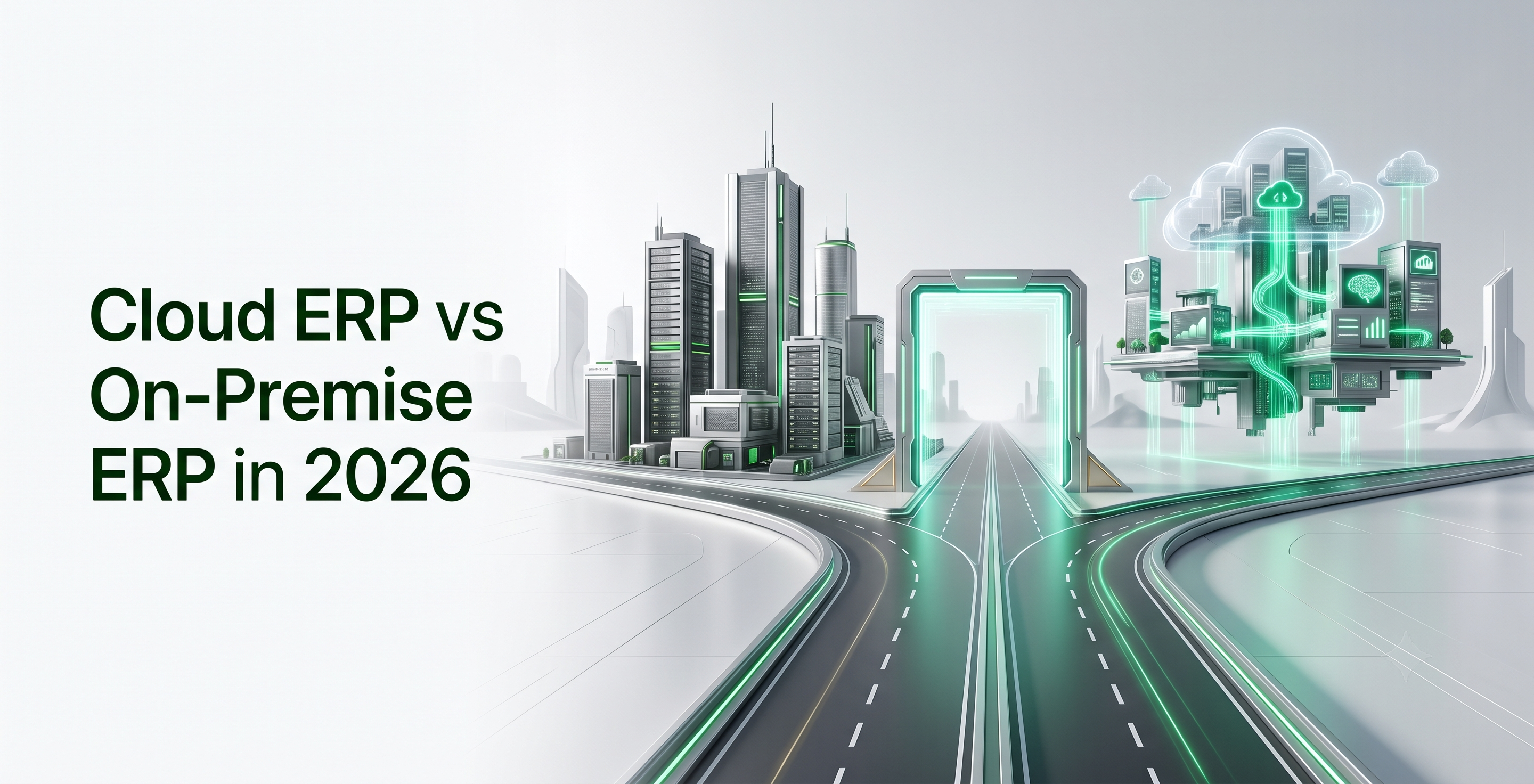
In 2026, most growing businesses are considering two main options: Cloud ERP and On-Premise ERP.
So, which one makes more sense for your business?
What Is Cloud ERP?
Cloud ERP is hosted on cloud infrastructure and accessed through the internet.
Instead of maintaining physical servers within your office, the infrastructure can be managed by the ERP provider, implementation partner, or cloud hosting provider.
Key Advantages
- Lower initial infrastructure investment
- Easier scalability as the business grows
- Access from multiple locations
- Faster deployment
- Easier backup and disaster-recovery planning
- Reduced internal server-maintenance workload
For businesses with multiple branches, remote teams, or expansion plans, cloud ERP can provide greater flexibility.
But cloud does not automatically mean risk-free.
Businesses still need to evaluate hosting location, backup policies, access controls, security responsibilities, uptime, and disaster recovery.
What Is On-Premise ERP?
With an on-premise deployment, the ERP is hosted on infrastructure controlled by the organization.
This gives the business greater control over its servers, data environment, updates, and network configuration.
Key Advantages
- Greater infrastructure control
- More control over upgrade timing
- Ability to meet specific internal IT policies
- Suitable for certain regulatory or highly specialized environments
- Less dependency on an external hosting provider
However, greater control also means greater responsibility.
The business needs the right technical team to manage security patches, backups, monitoring, server capacity, disaster recovery, and system availability.
Cloud ERP vs On-Premise ERP
The right choice is therefore not simply “cloud is better” or “on-premise is more secure.”
It depends on who can manage the associated risks better.
The Hidden Risk: Choosing Based Only on Cost
One common ERP mistake is comparing only the hosting price.
A cheaper server does not necessarily mean a lower ERP cost.
For an on-premise deployment, businesses should also consider:
Server hardware + IT resources + monitoring + backup + security + upgrades + disaster recovery + downtime risk.
For cloud ERP, businesses should evaluate:
Hosting fees + resource scalability + data location + provider reliability + backup policy + security + exit strategy.
The real comparison should be based on Total Cost of Ownership and Operational Risk, not simply the monthly hosting bill.
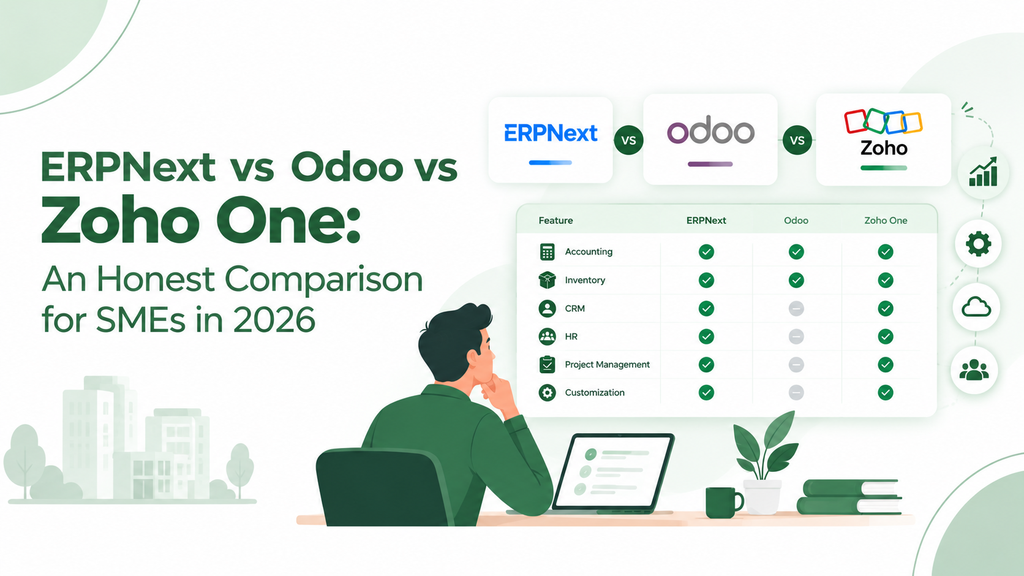
What About ERPNext?
Open-source platforms such as ERPNext provide additional deployment flexibility.
Businesses can choose managed cloud hosting or deploy ERPNext on infrastructure they control.
This means the deployment strategy can be selected based on the organization's size, technical capability, compliance requirements, growth plans, and risk profile rather than being locked into only one hosting model.
Which Should You Choose in 2026?
For many SMEs and growing businesses, a well-managed cloud ERP is likely to be the more practical choice because it reduces infrastructure complexity and makes scaling easier.
On-premise ERP can still make sense when an organization has:
- Strong internal IT capabilities
- Specific infrastructure or security policies
- Regulatory or data-hosting requirements
- Existing enterprise infrastructure
- A genuine business need for greater infrastructure control
The important point is this:
Don't choose your ERP deployment model because it is popular. Choose it based on your business risks, operational capabilities, and future growth
Final Thought
Your ERP could remain at the heart of your business for many years.
A deployment decision that looks inexpensive today can become a scalability, security, or maintenance problem tomorrow.
At LABOFWEB, we help businesses evaluate ERP architecture, deployment options, processes, and implementation risks before making long-term technology decisions.
Planning an ERP implementation or reviewing your current ERP infrastructure? Talk to LABOFWEB before deciding your next step.
Ready to Elevate Your Digital Operations?
Whether you need custom ERP solutions, web & mobile applications, or sustainability management, our expert team is here to help you scale efficiently.